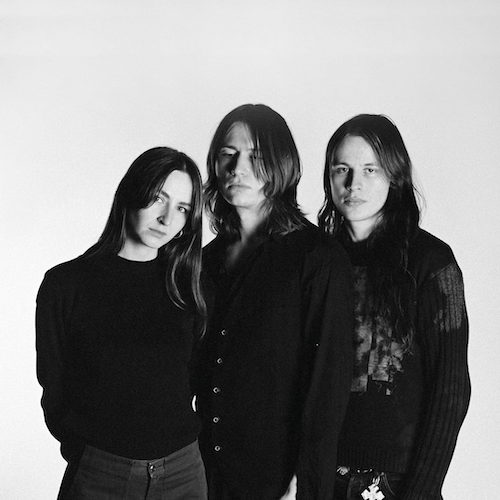
ROOMER
Roomer formed in Berlin as an almost inevitable convergence — four musicians whose long-standing friendships and overlapping histories across avant-garde improvisation, ethereal folk, ambient electronica, and experimental songwriting finally coalesced into a band. Their debut Leaving It All to Chance (2025, Squama Recordings) channels this shared background into guitar-driven heartbreak, weaving noise, melody, and diaristic clarity into something both disorienting and deeply intimate. Crafted in a resolutely DIY spirit, the album draws on their varied practices without smoothing the edges, allowing fragility, texture, and distortion to coexist in loose, shifting alignment. During the album’s creation, guitarist Arne Braun’s eight-string architectures added a layered, spectral weight to the sound; with his departure to focus on other projects, Roomer now continue as a trio.
Their music rests on contrast and accumulation — whispered, confessional lines cutting through gauzy guitar haze, synth tones that shimmer like stray memories, and basslines that hover between propulsion and emotional contour. A sense of hazy club-show physicality lingers throughout, as if the songs carry the residue of warm rooms, drifting feedback, and the soft turbulence of bodies moving close by. Beneath the dream-tilted surfaces runs a quiet restlessness: moments where tenderness buckles, distortion intrudes, or a melody briefly overexposes the heart of a song before retreating again. It is music that tests the weight its gentler edges can bear, shifting between clarity and blur with careful, unhurried intention.
WHAT TO EXPECT
Roomer draw the room inward with subdued openings before their sound thickens into soft-focused, dreamlike layers. Dynamics rise and fall in slow, deliberate waves, letting warmth, grit, and faint dissonance merge without puncturing the mood’s intimacy. As a trio they perform with a fluid, close-knit attentiveness, allowing texture and atmosphere to guide the set more than sharp peaks. When the sound dissolves, it leaves the space gently altered — as if something quiet has shifted beneath the surface, noticeable only once the silence has returned.


